Pixxel's first commercial hyperspectral satellites change what climate buyers can ask for
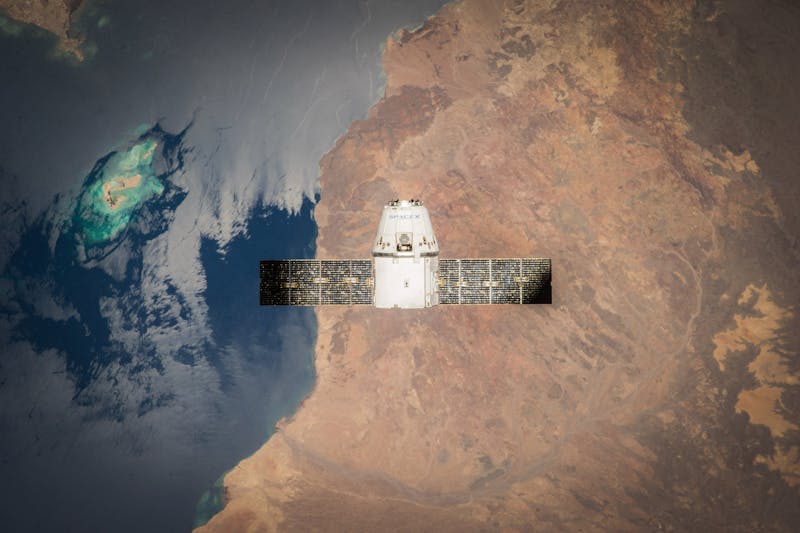
Pixxel's transition from a well-funded satellite startup with promising prototypes to a company with a functioning commercial hyperspectral constellation marks one of the more significant milestones in Indian commercial space in recent years. The Bengaluru-and-Los Angeles company, founded by Awais Ahmed and Kshitij Khandelkar, built its thesis on a specific and defensible technical gap: that existing optical-satellite imagery was too spectrally limited to answer the questions that agriculture, mining, environmental monitoring and oil-and-gas customers were actually asking, and that hyperspectral sensors - which capture dozens of wavelength bands rather than the three to five captured by conventional multispectral cameras - could unlock an entirely new tier of earth-observation insights. The Firefly constellation, now in early commercial operations, is delivering imagery at resolutions and spectral depths that were not previously available from any commercial vendor at scale. For agriculture customers - crop health monitoring, yield prediction, irrigation stress detection - the hyperspectral advantage is the ability to detect chlorophyll stress, water content and nutrient deficiencies that look identical in conventional RGB imagery. For emissions monitoring - a growing category as carbon markets develop and industrial facilities face regulatory pressure on methane, CO2 and other markers - hyperspectral data provides the specificity needed to attribute emissions to specific point sources rather than drawing regional averages. The commercial model is a data subscription and analytics service rather than a hardware sale. Pixxel sells access to satellite imagery and the derived analytics products - processed layers that answer specific business questions rather than raw sensor data - which requires investment in both the satellite hardware and the data science platform that converts raw hyperspectral observations into actionable insights. This adds complexity but also creates stickiness, as customers who have built workflows around Pixxel's data products have higher switching costs than those simply purchasing raw imagery. India's government has been a meaningful early reference customer for applications including agricultural monitoring under national crop-insurance and procurement schemes, where hyperspectral data provides better early-warning of crop failures than conventional alternatives. This government relationship has been important for Pixxel's revenue foundation and has helped attract the international commercial customers who see government adoption as a credibility signal. What to watch: the speed at which the Firefly constellation's revisit frequency reaches the daily or near-daily cadence that time-sensitive applications like disease outbreak and emissions monitoring require, how the pricing of hyperspectral data evolves as Pixxel adds more capacity, and whether any of the major agricultural commodities trading companies make a strategic investment in exchange for preferred data access.
Original source: TechCrunch